
The Hague | 14 October 2026
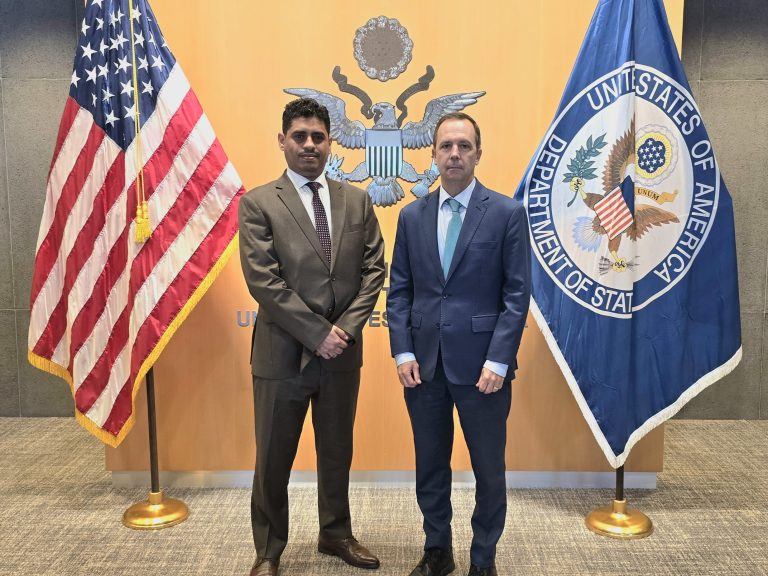
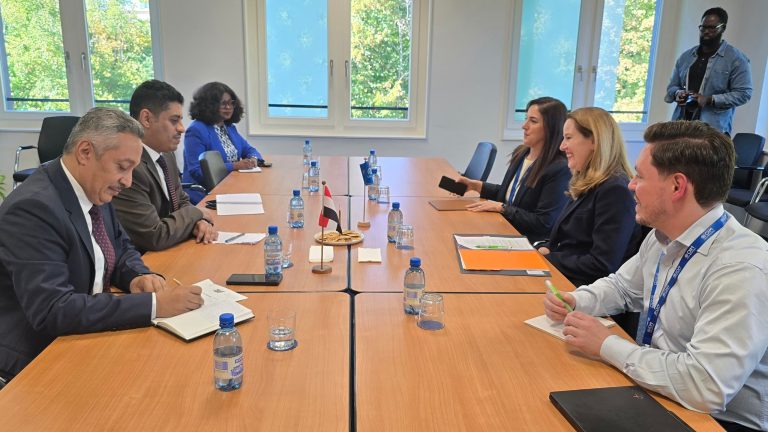
Minister of Human Rights, Mashdal Mohammed, met today at the headquarters of the Dutch Ministry of Foreign Affairs in The Hague with the Human Rights Ambassador at the Dutch Ministry of Foreign Affairs, Wim Geerts, to discuss the latest developments in the human rights and humanitarian situation in Yemen and ways to support the Ministry’s capacities in monitoring and documentation. He called for practical steps, including the designation of the Houthi militias as a terrorist organization by the European Union, increased pressure on them, and enhanced political and economic support for the Yemeni government.
The Minister reviewed the repercussions of the escalation that the militias have continued since last August, which has resulted in the displacement of nearly a quarter of a million people from their cities and villages, and the flight of approximately 4,000 others to Djibouti and Somalia. He pointed to the targeting of civilians while fleeing conflict areas, internally displaced persons’ camps in Marib, and civilian objects with ballistic missiles and drones in several governorates.
He addressed the militias’ continued recruitment of children and deployment of them to battlefronts, the exploitation and recruitment of migrants arriving from countries in the Horn of Africa, as well as the abduction and enforced disappearance of civilians, United Nations personnel, and humanitarian organization staff, and the prosecution of some of them on fabricated charges. He also reviewed the ongoing consequences of landmine planting, which the Ministry has documented as having caused more than 12,000 deaths and injuries, including survivors who have lost limbs.
The Minister warned of the dangers of the renewed siege of Taiz city and the disruption of supplies to its residents, putting the lives of more than one million people at risk and exacerbating their suffering, stressing that women and children are the most affected by these violations. He emphasized the importance of supporting the Ministry’s efforts, strengthening its institutional capacities, and enhancing the efficiency of its staff in monitoring and documentation, thereby reinforcing the protection of victims and accountability for those responsible for violations.
The Undersecretary of the Ministry for International Cooperation, Nabil Abdulhafeedh, reviewed the Ministry’s plans to develop mechanisms for receiving complaints and reports, referring violation cases to the competent judicial authorities, and providing legal assistance to victims. He affirmed the government’s openness to proposals aimed at strengthening human rights protection, its confidence in the National Commission to Investigate Alleged Violations of Human Rights, and the importance of supporting the Commission in carrying out its mandate.
For his part, Ambassador Geerts affirmed the Kingdom of the Netherlands’ support for the Yemeni government and its continued assistance to the Yemeni people, expressing his sympathy for the victims of violations. He explained that his country currently provides support for projects in water management, health, peacebuilding, and the rule of law, in addition to other support allocated to humanitarian and relief projects. He emphasized the importance of exploring practical steps that the Netherlands and the European Union could take to support Yemen and address developments in the country.
The Dutch Ambassador expressed his appreciation for the Ministry’s efforts in documenting violations and the importance of this work in holding those involved accountable and ensuring that they do not escape punishment. He also highlighted his country’s support for the efforts of the Office of the United Nations High Commissioner for Human Rights, the press, human rights defenders, and transitional justice in Yemen.