Geneva | 1 October 2026
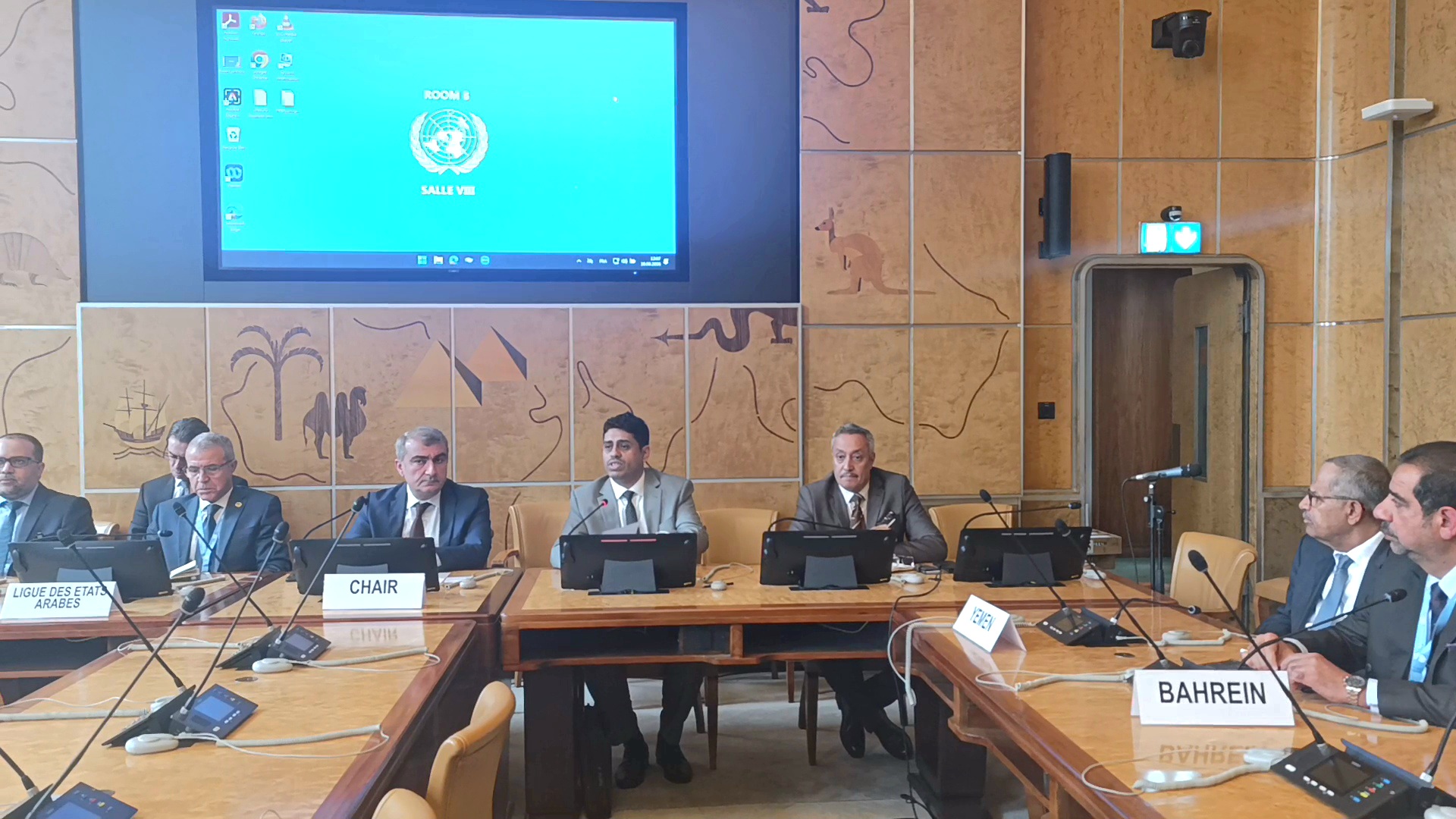
The Minister of Human Rights, Mashdal Mohammed Omar, warned of the worsening humanitarian and security repercussions of the recent military escalation by the terrorist Houthi militia, and the accompanying violations against civilians, the expansion of displacement, and the intensification of child recruitment operations, during his meeting today at the United Nations headquarters in Geneva with ambassadors and representatives of the Arab Group, to brief them on the latest developments in the human rights situation in Yemen.
The meeting was opened by the Ambassador of the Republic of Iraq, Chair of the Arab Group, who welcomed the Minister and the accompanying delegation. The Minister reviewed the violations taking place in areas affected by the escalation in the districts of the West Coast, Taiz, Aden, Lahj, Al-Dhalea, Al-Bayda, Marib, and Al-Jawf, and the targeting of civilians and civilian objects with ballistic missiles, drones, and artillery shelling, including attacks on the city of Mocha and its port.
The Minister addressed the shelling of a popular market in front of a commercial complex in Al-Mudarabah and Ras Al-Arah District in Lahj Governorate with two ballistic missiles on 21 September, which resulted in deaths, injuries, and damage to property. He explained that the recent escalation had forced more than 200,000 people to flee their homes, placing significant pressure on areas under the control of the legitimate government, while reviewing the government’s efforts to meet their humanitarian needs and provide them with protection and security.
The Minister also addressed attacks on the health and education sectors, noting that more than 26 health facilities in Taiz, Hodeidah, and Marib had been targeted and damaged, in addition to the attack on the Saudi Field Hospital in Al-Khawkhah and the looting and destruction of humanitarian facilities funded by the King Salman Humanitarian Aid and Relief Centre on the West Coast, as well as the closure or suspension of classes in 243 schools, affecting more than 137,000 male and female students.
The Minister of Human Rights also reviewed the continued crimes of abduction, torture, enforced disappearance, sham trials, and arrest campaigns targeting citizens because of their celebration of the anniversary of the 26 September Revolution. He noted that the government had documented the deaths of more than 450 abductees under torture in militia prisons, the continued detention of more than 63 employees of the United Nations, humanitarian organizations, and civil society, and the deaths of a number of detainees under mysterious circumstances.
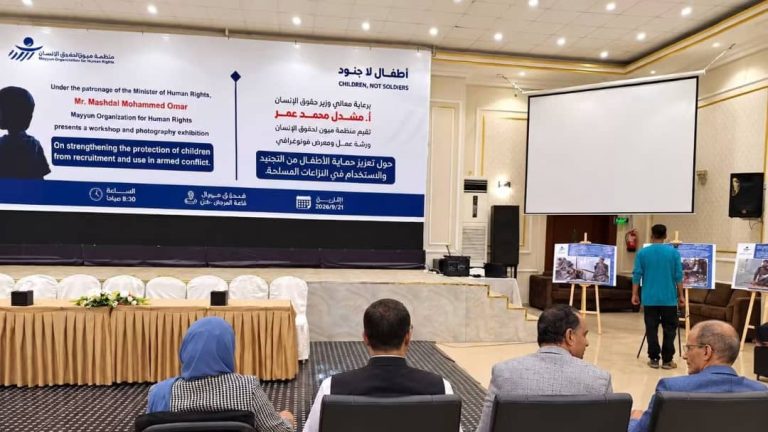
The Minister warned of the escalation of child recruitment campaigns, including the abduction of children from schools and residential neighborhoods and taking them to battlefronts, noting that families are still searching for their missing children, while it has been found that children were transferred to the front lines. He also addressed the pressure exerted by the militia on families, particularly those in need, to force them to hand over their children for recruitment, and the threat this poses to their lives, safety, and future.
During the meeting, Deputy Minister of Human Rights Nabil Abdulhafiz reviewed the risks posed by the militia’s approach toward strategic areas adjacent to Dhubab District and Bab Al-Mandab, and the threat this poses to regional security and international navigation. He pointed to the documented entry of thousands of personnel and experts from the Iranian Revolutionary Guard to support Houthi operations, including maritime operations, missile launches, and jamming, as well as the use of African fighters within the militia’s ranks, stressing the need for concerted efforts to confront these threats.
The Deputy Minister also addressed the Ministry’s efforts in dealing with United Nations mechanisms and the submission of more than 13 official reports in response to inquiries from Special Rapporteurs, stressing the need for international reports and positions to clearly reflect the scale and gravity of the violations. He emphasized the importance of strengthening Arab coordination within the Human Rights Council to highlight the facts and support the government’s efforts to protect civilians and confront violations.
The Minister expressed his appreciation for the role played by the Arab Group in supporting Yemen and backing resolutions concerning it in the Human Rights Council, stressing the importance of continuing logistical, technical, and technological support to strengthen national efforts to protect human rights. He also praised the support of the countries of the Coalition to Support Legitimacy, foremost among them the Kingdom of Saudi Arabia, for the Yemeni people and the legitimate government politically, economically, and humanitarianly, calling for mobilizing international support for state institutions and rejecting the equation of those institutions with terrorist militias.
The ambassadors and representatives of the Arab Group expressed their appreciation for the Minister’s briefing and the human rights and humanitarian developments and risks affecting Yemen and the region that it presented, affirming their countries’ support for Yemen’s unity, sovereignty, and stability. They renewed their support for the Yemeni government and its official institutions and their commitment to continuing to support Yemen in diplomatic forums in Geneva and at the Human Rights Council, in a manner that strengthens efforts to protect human rights.
The meeting was attended by Yemen’s Permanent Representative to the United Nations in Geneva, Ambassador Ali Mujawar, and the First Secretary at the Mission and official responsible for the human rights portfolio, Yahya Al-Rafiq.