Aden – As reported by Okaz newspaper
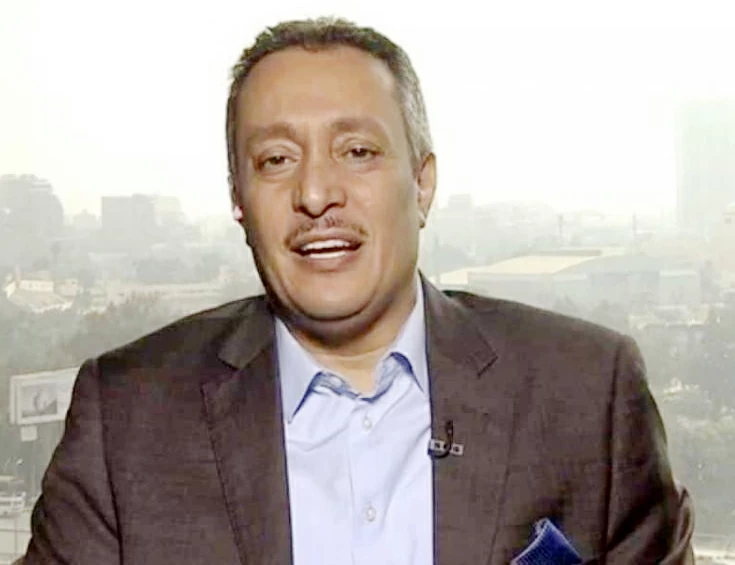
Undersecretary of the Ministry of Human Rights for Partnership and International Cooperation, Nabil Abdulhafeedh, gave an interview to the Saudi newspaper Okaz, in which he discussed the latest developments in the human rights situation in Yemen, the violations committed by the Houthi militia, the Ministry’s efforts to document them and submit them to international mechanisms, as well as his views on ways to strengthen human rights protection and support the process of restoring the state.
Abdulhafeedh affirmed that the Ministry of Human Rights continues its efforts to document violations and submit them to the competent international mechanisms, noting that the Partnership and International Cooperation Sector had prepared approximately ten specialized reports over the past three months, which were referred to United Nations Special Rapporteurs and the Security Council Sanctions Committee’s Panel of Experts. These reports contained evidence and indications of grave violations, placing international bodies before their responsibilities regarding the systematic Houthi crimes, foremost among them the recruitment of children, the siege of tribes, and the use of irregular migrants arriving from Ethiopia as bargaining chips and cannon fodder in battles.
The Undersecretary also reviewed what official reports had documented regarding violations against women, referring to practices attributed to members of the so-called “Zainabiyat” and “Fatimiyat,” including raiding homes, forcibly spreading sectarian ideas, and abducting and detaining hundreds of Yemeni women in secret detention facilities, amid pressure and threats against their families to prevent them from revealing their fate or disclosing any information about them. The reports also addressed what he described as grave violations targeting the educational process, including the imposition of sectarian orientations within educational institutions, which has led some families to refrain from enrolling their daughters in schools. He warned of the intellectual and social consequences of these practices.
Regarding landmines and violations against civilians, Abdulhafeedh condemned the continued direct artillery shelling of residential neighborhoods in Taiz, Al-Dhalea, and Hodeidah, which has claimed the lives of thousands of women, children, and elderly people. He highlighted what he described as the darkest aspect of the militia, represented by the planting of more than 2.5 million anti-personnel mines and treacherous explosive projectiles, which have so far caused approximately 5,000 civilian deaths and injuries. At the same time, he praised the pioneering and historic role of the Kingdom of Saudi Arabia through the King Salman Humanitarian Aid and Relief Centre, which represents the foremost humanitarian lifeline for Yemenis, and the Saudi Project for Landmine Clearance in Yemen (Masam), which, in cooperation with government authorities, has successfully removed more than half a million mines and explosive projectiles, although contaminated areas still require many years to be cleared.
The Undersecretary of the Ministry of Human Rights also denounced, in his remarks, what he described as farcical performances and sham, expedited trials that end in predetermined death sentences against people expressing their opinions and ordinary citizens on baseless charges. These practices have recently expanded to target United Nations personnel and staff of international organizations, with the aim of spreading fear and silencing voices. He affirmed that hopes today rest on the vigilance and unity of Yemenis to end this dark nightmare and move toward building a new federal state that restores the spirit of Happy Yemen and affirms its position as a strong pillar of development and security within its Arab sphere.
Speaking about developments on the ground and the political situation, Abdulhafeedh stated that “the coup militia has proven over two decades that it is a radical ideological group based on exclusionary thinking that denies the other and accepts coexistence only on the basis of its exclusive presence.” He stressed that this rebellious group does not believe in peace and understands only the language of force, and that all de-escalation initiatives it accepts are nothing more than transparent maneuvers to regroup its ranks and return to war and destruction.
In the course of the interview, the Undersecretary of the Ministry of Human Rights considered the ongoing treacherous coup attack on Hays District in Hodeidah to be a blatant reflection of the aggressive nature inherent in this group, which he said is rejected by the entire Yemeni people. He explained that the Yemeni legitimate government, supported by the Coalition to Support Legitimacy, had presented initiative after initiative and extended the hand of peace, not out of confidence in the militia, but to establish the evidence and expose its true nature and treacherous intentions before the international community.
Abdulhafeedh reviewed the militia’s movements on the ground and its erratic actions, explaining that whenever tensions arise, the militia quickly escalates violations and piracy against international navigation and global trade in the Red Sea and the Bab al-Mandab Strait, in a desperate attempt to use waterways as cheap bargaining chips and undermine regional and international peace and security in the region.
He pointed out that the current timing precisely exposes the Houthi plan. As soon as the situation calmed on certain fronts, the militia rushed to intensify its war rhetoric and issue blatant threats against the brothers in the Kingdom of Saudi Arabia and government forces in the liberated areas, while simultaneously exploiting the atmosphere of de-escalation provided by the Coalition and the legitimate government to attempt to impose a new reality, bring Iranian aircraft into the occupied Sana’a Airport, and facilitate the entry of military and political leaders affiliated with Tehran to manage the situation from within the seized capital.
The Undersecretary of the Ministry of Human Rights called on the Security Council and the international community to move beyond “gray diplomacy and ambiguous appeasement,” which have only increased the militia’s arrogance and persistence in its wrongdoing. He called for a decisive and urgent international resolution designating the group as a terrorist organization, along with the resulting political, military, and economic consequences sufficient to impose a comprehensive blockade on it and subdue it by force. He emphasized the importance of the growing public anger and rejection embodied in the “tribal mobilization” (Nakf Qabali) of the people of Al-Jawf Governorate and other areas against Houthi arrogance, which necessitates unifying the internal front politically, militarily, and tribally to form a broad front that will bring this dark chapter of Yemen’s history to an end.