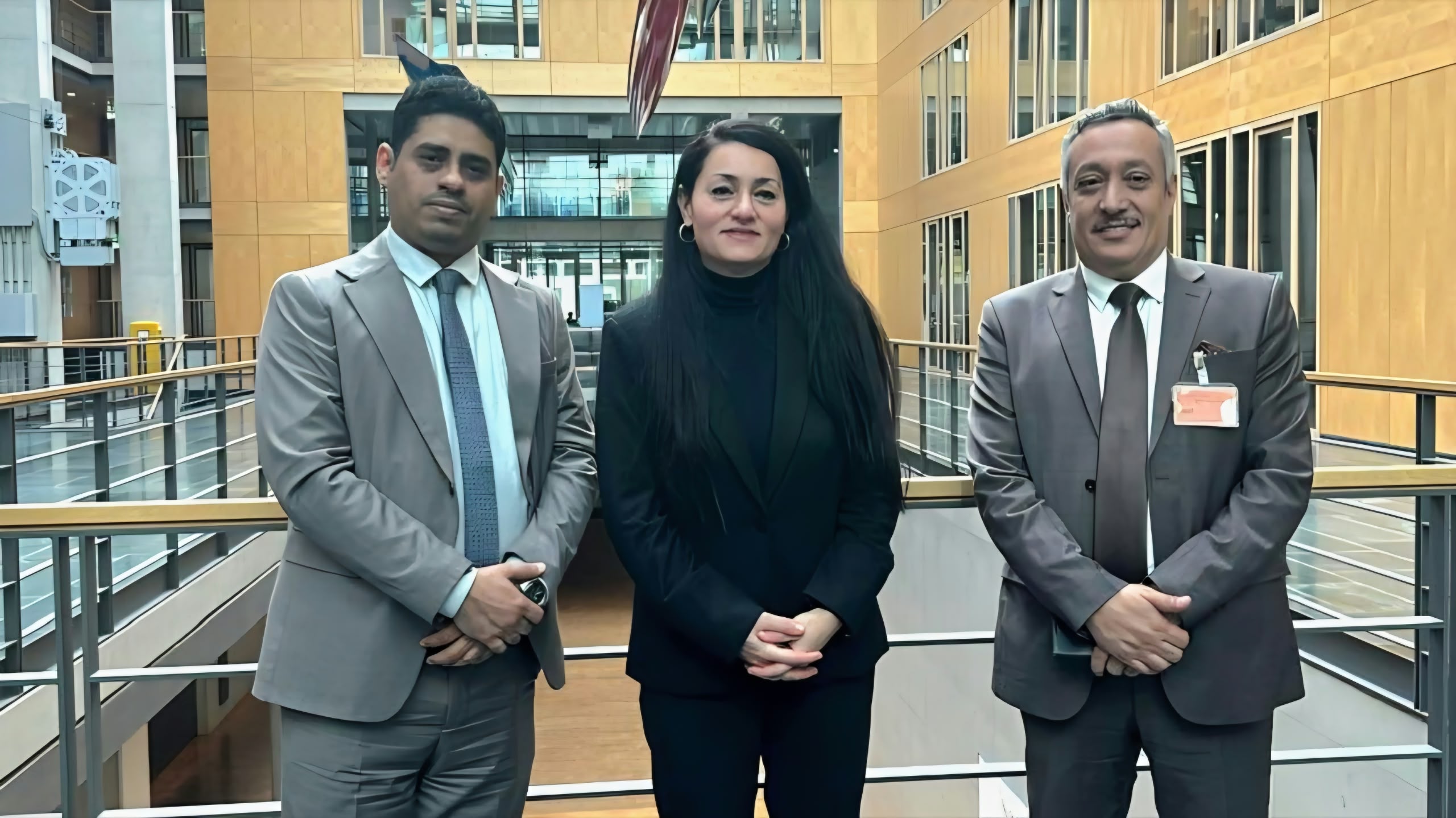
Berlin | October 20, 2026
Minister of Human Rights Mashdal Mohammed met with German Member of Parliament Lamya Kaddor of the Green Party, a member of the Committee on Internal Affairs and a substitute member of the Committee on Foreign Affairs, to discuss the latest developments in the human rights situation in Yemen and ways to strengthen German support for the protection of civilians and assistance to the Yemeni government.
During the meeting, attended by Deputy Minister Nabil Abdulhafeedh, the Minister reviewed the escalating violations committed by the terrorist Houthi militias, their continued and systematic targeting of civilians and civilian objects, and their use of heavy weapons in populated areas. He also addressed the siege of Taiz and its consequences for the lives of residents and their access to food, medicine, and essential services.
He discussed the waves of forced displacement and the suffering they inflict on families compelled to leave their homes, emphasizing the importance of strengthening humanitarian support for displaced persons and supporting government efforts to restore security and end the violations that force residents to flee.
The Minister explained that the crimes committed by the militias and their methods of subjugating and intimidating the population are no less dangerous than the practices of other terrorist organizations, including ISIS. He called for a German position supporting the designation of the Houthi militias as a terrorist organization at the European level, which would help limit their ability to continue committing crimes.
He also addressed the abduction and recruitment of children, their exposure to ideological mobilization, and their involvement in combat. He noted that the militias had targeted 129 schools during the recent period, depriving nearly 150,000 children of education, alongside the continued planting of landmines that have claimed the lives of large numbers of civilians and injured others.
The Minister further discussed violations against women and the additional burdens they bear as a result of forced displacement and supporting their families, as well as the restrictions imposed by the militias on their freedom of movement, including the requirement to be accompanied by a male guardian (mahram) when traveling. He highlighted the resulting obstacles to women’s opportunities for employment, education, and access to healthcare.
The Minister reviewed the situation of abducted United Nations personnel and other individuals held by the militias, as well as the violations they face, stressing the need to intensify international pressure to secure their release. He also addressed the exploitation of African migrants and the militias’ use of the narcotic substance Captagon among fighters in their ranks.
During discussions on the government’s vision for the next phase, the Minister affirmed that everyone involved in committing violations and crimes would be referred to the judiciary, emphasizing the government’s commitment to establishing transitional justice that guarantees victims’ rights and holds those responsible for violations accountable.
He explained that restoring the state would open the way for peaceful political participation within the framework of the Constitution, the law, and the outcomes of the National Dialogue Conference. Those who have not been involved in crimes would be able to engage in national political activities and establish entities that express their ideas through peaceful means, away from weapons, violence, and the imposition of beliefs by force.
Minister Mashdal emphasized the importance of Germany’s role in supporting the Yemeni government in restoring state institutions and protecting the population, strengthening political and humanitarian support for Yemen, and backing a firm European position toward the terrorist Houthi militias.